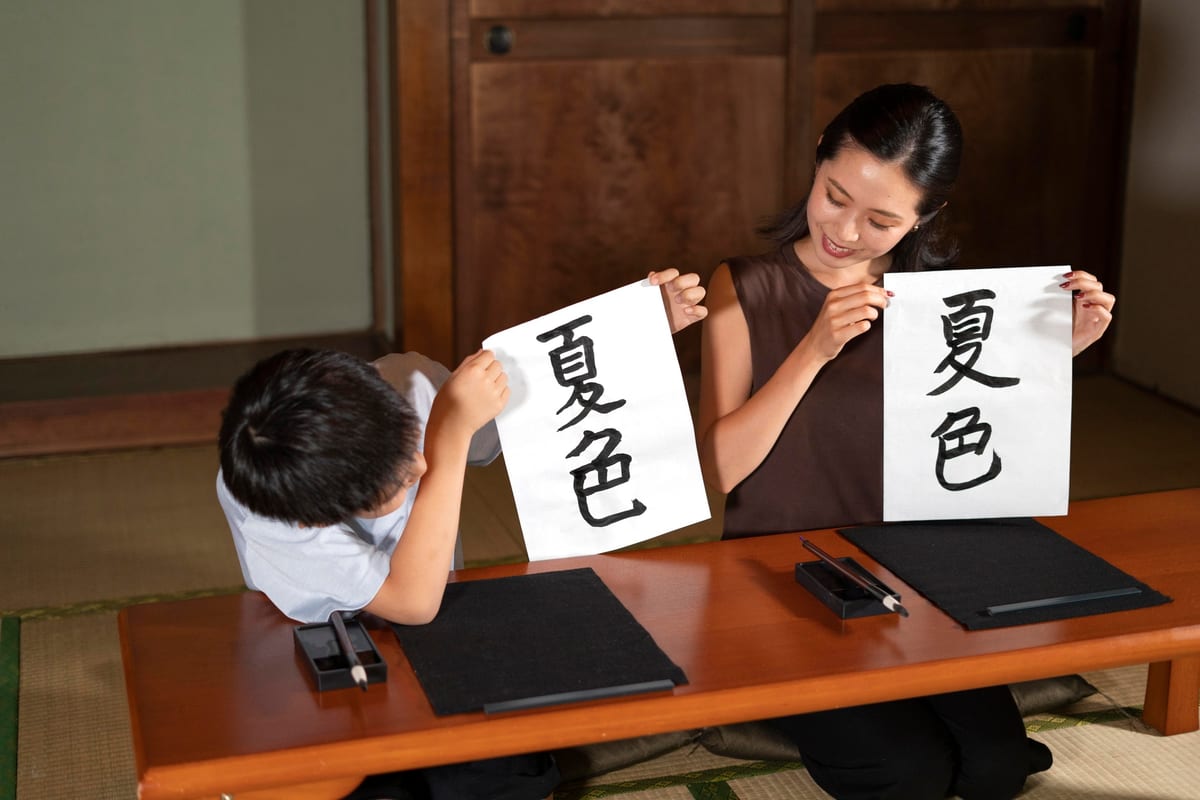

The Korean alphabet, called Hangul (한글), has 24 basic letters: 14 consonants and 10 vowels. Instead of sitting in a row, the letters are stacked into square blocks, and each block is one syllable. King Sejong introduced the system in the 1440s so that ordinary people could learn to read quickly.
That design goal still pays off. Below you will find every basic letter with its sound, the simple rules for building syllable blocks, the story behind the script, and an honest look at what “easy” does and does not mean when you start learning Korean. Explore our translation services services for details.
Key Takeaways
- Hangul is a true alphabet with 14 basic consonants and 10 basic vowels, not a set of thousands of characters.
- Letters are grouped into syllable blocks, so the word 한글 is two blocks made of six letters.
- King Sejong presented the script at court at the end of 1443, and it was published in 1446 in a text called Hunminjeongeum.
- South Korea celebrates Hangul Day on October 9, while North Korea marks its own alphabet day on January 15.
- The alphabet is quick to learn, but the Korean language itself takes English speakers a long time to master.
What Is the Korean Alphabet?
Hangul is the writing system used for Korean in both South and North Korea. It is a true alphabet: each letter stands for a consonant or a vowel sound. The difference is how the letters are arranged on the page.
Once you know two dozen letters, you can sound out any Korean word, even if you have no idea what it means yet.
South Korea’s official romanization writes the name as Hangeul, while Hangul is the form most common in English. North Koreans call it Chosŏn’gŭl. Explore our origins of writing systems for details.
The 14 Basic Consonants
The table below follows the standard South Korean order. Romanizations follow the Revised Romanization system published by the National Institute of Korean Language. Where two spellings appear, the second is used at the end of a syllable or before another consonant.
| Letter | Letter name | Romanization | Approximate sound |
|---|---|---|---|
| ㄱ | giyeok (기역) | g / k | A soft g, as in “go” |
| ㄴ | nieun (니은) | n | n, as in “no” |
| ㄷ | digeut (디귿) | d / t | A soft d, as in “day” |
| ㄹ | rieul (리을) | r / l | A light tapped r before a vowel, l at the end |
| ㅁ | mieum (미음) | m | m, as in “moon” |
| ㅂ | bieup (비읍) | b / p | A soft b, as in “boy” |
| ㅅ | siot (시옷) | s | s, as in “sun” |
| ㅇ | ieung (이응) | (silent) / ng | Silent at the start of a block, ng as in “song” at the end |
| ㅈ | jieut (지읒) | j | j, as in “jam” |
| ㅊ | chieut (치읓) | ch | ch, as in “chair” |
| ㅋ | kieuk (키읔) | k | A strong k with a puff of air, as in “kite” |
| ㅌ | tieut (티읕) | t | A strong t with a puff of air, as in “top” |
| ㅍ | pieup (피읖) | p | A strong p with a puff of air, as in “pie” |
| ㅎ | hieut (히읗) | h | h, as in “hat” |
Five of these consonants can also be doubled to make tense sounds: ㄲ (kk), ㄸ (tt), ㅃ (pp), ㅆ (ss) and ㅉ (jj).
The 10 Basic Vowels
Every basic vowel is made of long and short strokes. Adding a second short stroke puts a “y” in front of the sound, so ㅏ (a) becomes ㅑ (ya). English sound hints are approximate.
| Letter | Romanization | Approximate sound |
|---|---|---|
| ㅏ | a | a, as in “father” |
| ㅑ | ya | ya, as in “yard” |
| ㅓ | eo | Close to the u in “sun” |
| ㅕ | yeo | Close to “young” |
| ㅗ | o | o, as in “go” (kept short) |
| ㅛ | yo | yo, as in “yoga” |
| ㅜ | u | oo, as in “moon” |
| ㅠ | yu | Like the word “you” |
| ㅡ | eu | No English match: say “oo” with unrounded lips |
| ㅣ | i | ee, as in “see” |
These ten combine into 11 more vowels, such as ㅐ (ae), ㅔ (e), ㅘ (wa) and ㅢ (ui). Each one is simply two familiar shapes written side by side. Explore our evolution of a language over time for details.
How Do Hangul Syllable Blocks Work?
Korean letters are not written one after another in a line. They are packed into a square block, and each block is read as one syllable. The rules are short:
- Every block starts with a consonant.
- Next comes a vowel. Tall vowels like ㅏ sit to the right of the consonant, and flat vowels like ㅗ sit underneath it.
- A block may end with a final consonant, which always goes at the bottom.
- If a syllable begins with a vowel sound, the silent ㅇ fills the consonant slot.
Read each block left to right, top to bottom. Here are three real words:
| Word | Blocks and letters | Romanization | Meaning |
|---|---|---|---|
| 한글 | 한 (ㅎ + ㅏ + ㄴ), 글 (ㄱ + ㅡ + ㄹ) | Hangeul | The Korean alphabet |
| 부산 | 부 (ㅂ + ㅜ), 산 (ㅅ + ㅏ + ㄴ) | Busan | A port city in South Korea |
| 세종 | 세 (ㅅ + ㅔ), 종 (ㅈ + ㅗ + ㅇ) | Sejong | The king who created Hangul |
Look at 종 in the last row. The ㅇ sits at the bottom, so it is not silent there: it makes the “ng” sound. Modern Korean allows 11,172 possible blocks, yet you never memorize them, because each is assembled from the same few letters.
Who Created Hangul, and When?
Hangul was created under King Sejong the Great, the fourth king of the Joseon dynasty, who reigned from 1418 to 1450. Before Hangul, Koreans wrote with Chinese characters, which fit the Korean language poorly and took years of study. Explore our understanding language structure for translation for details.
Sejong presented the new script at court at the end of 1443. It was formally published in the ninth lunar month of 1446 in a book titled Hunminjeongeum, which means “The Correct Sounds for the Instruction of the People.” The manuscript survives, and UNESCO added it to its Memory of the World register in 1997.
The original system had 28 letters. Four fell out of use over the centuries, leaving the 24 basic letters taught today. How much his court scholars contributed is still debated, but records from the period name the king as the main inventor.
Not everyone cheered. In 1444 the court scholar Choe Manri submitted a formal protest, arguing that a homegrown script broke with Chinese tradition. The name “Hangul” is also much younger than the alphabet: it was coined in the early 1910s by the linguist Ju Si-gyeong.
When is Hangul Day?
South Korea celebrates Hangul Day on October 9, a date chosen to mark the 1446 publication (the exact day is an estimate converted from the lunar calendar). It is a public holiday. North Korea observes its version on January 15. Explore our East Asian language translation services for details.
Why Is Hangul So Easy to Learn?
Most writing systems grew slowly and picked up quirks along the way. Hangul was designed on purpose, and the logic shows in the letters themselves.
- The consonant shapes are a pronunciation guide. According to the National Hangeul Museum, the five base consonants (ㄱ, ㄴ, ㅁ, ㅅ, ㅇ) were modeled on the speech organs that produce them. ㅁ, for example, reflects the shape of the mouth.
- Related sounds look related. Add a stroke to ㄱ (g) and you get ㅋ (k). Add strokes to ㄴ (n) and you get ㄷ (d), then ㅌ (t).
- The vowels come from three simple marks. A dot for heaven, a flat line for earth and an upright line for a human being were combined to form the vowels, as the Korean Cultural Center New York explains.
- Spelling is consistent. Each letter keeps a predictable sound, with a manageable set of sound-change rules.
UNESCO even named its King Sejong Literacy Prize, established in 1989, after the script’s creator.
Now the honest part. An easy alphabet is not the same as an easy language. The U.S. Department of State’s Foreign Service Institute places Korean in Category IV, its hardest group for native English speakers, alongside Arabic, Japanese, Mandarin and Cantonese, with about 88 weeks of full-time study. If you are comparing options, see our guides to the easiest languages for English speakers and the hardest languages to learn.
From Reading Hangul to Translating Korean Documents
Sounding out 한글 is only the first step. Reading a Korean family register, a university diploma or a business contract calls for much more than knowing the letters. Names are a common trouble spot: the same Korean name can be romanized several ways (think Lee, Yi and Rhee), and the spelling on a translation needs to match a passport and other records exactly. Explore our professional document translation services for details.
Formality matters too. Korean has distinct levels of politeness that a translator must carry into natural English, or from English back into Korean. When paperwork is headed to a school, court, employer or immigration office, a human translator fluent in both languages is the safer route. Our Korean translation services cover personal, legal and business documents.
Frequently Asked Questions
How many letters are in the Korean alphabet?
Hangul has 24 basic letters: 14 consonants and 10 vowels. On top of those, there are 5 double consonants and 11 combined vowels built from the basic shapes, which brings the total to 40 letters if you count every form. When King Sejong’s script was published in 1446 it had 28 letters, but four have since dropped out of everyday use.
How long does it take to learn Hangul?
Most people can learn to recognize the 24 basic letters and sound out simple words in a few hours to a few days of focused practice. Reading smoothly takes longer, because you need to get used to blocks and a handful of sound-change rules. Learning to read Hangul is very different from learning Korean, though. Vocabulary, grammar and politeness levels take English speakers years of steady study.
Is Korean written with Chinese characters?
Not in everyday use. Modern Korean is written almost entirely in Hangul. Chinese characters, called Hanja in Korean, were the main writing system before Hangul. Today in South Korea they appear only in limited settings, such as some newspapers, academic writing and cases where a word’s meaning needs to be made clear. North Korea removed Hanja from general writing in 1949, although it is still taught in schools there. Explore our Korean business translation support for details.
Is Hangul the same as the Korean language?
No. Korean is the language, and Hangul is the alphabet used to write it, in the same way that English is a language and the Latin alphabet is its script. In North Korea the same alphabet goes by a different name, Chosŏn’gŭl.
Why does the letter ㅇ sometimes have no sound?
The circle-shaped letter ㅇ does two jobs. Every Korean syllable block must begin with a consonant, so when a syllable starts with a vowel sound, ㅇ is written first as a silent placeholder. At the bottom of a block, the same letter is pronounced “ng,” as in “song.” The syllable 영 (yeong) shows both uses at once: the top circle is silent, and the bottom circle gives the final “ng” sound.
Need Something Translated to or from Korean?
Whether it is a single certificate or a stack of business paperwork, our human translators are glad to help with Korean and many other languages. Chat with us for a quote, or call 1-800-230-7918 to talk through what you need.